The qamis for men, a long traditional garment worn by many Muslims every day or on special occasions, comes in many styles, fabrics and cuts that are not always easy to choose between.
This article presents the key criteria for choosing your qamis well.
Contents
- What is a qamis?
- The main fabrics available
- The different cuts and lengths
- Choosing your qamis for the occasion
- Taking your measurements before buying
- Care tips
- Frequently asked questions
What is a qamis?
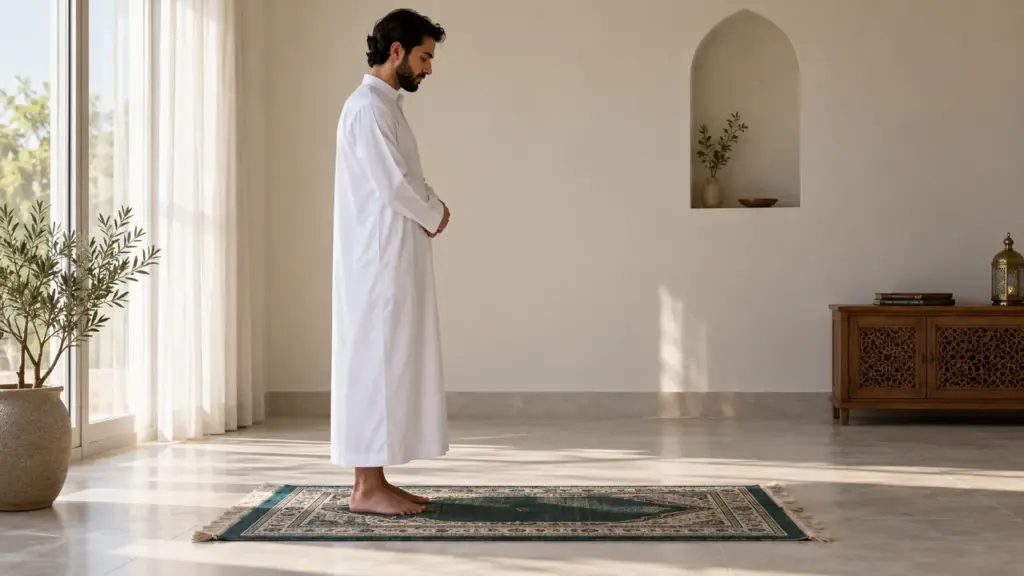
The qamis is a long tunic, usually reaching the ankles or calves, worn by men in many parts of the Muslim world. Simple and loose, this traditional garment favours comfort and sobriety, and today comes in many variations depending on regional origins and personal preferences.
The main fabrics available
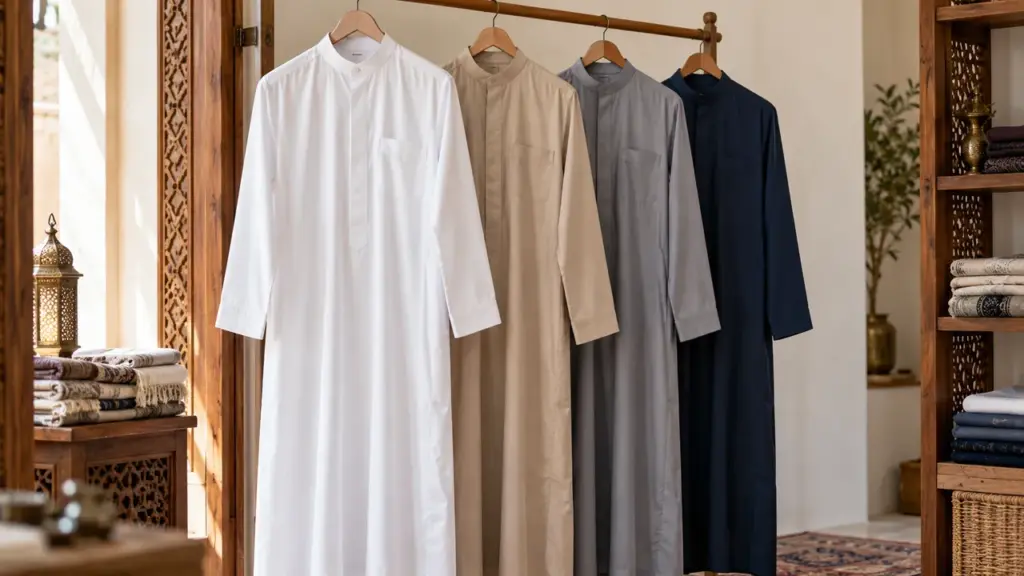
Cotton remains the most common fabric for its breathability and everyday comfort, particularly in hot climates. Polyester and synthetic blends resist creasing better and are easier to care for, while finer fabrics such as linen are often chosen for special occasions. Silk, however, should be avoided in a man’s garment: holding silk and gold, the Prophet ﷺ said “These two are forbidden to the men of my community” (Sunan Abi Dawud 4057, graded sahih by Al-Albani).
The different cuts and lengths
Several regional styles stand out: the Pakistani qamis, often worn with matching trousers (shalwar); the Gulf qamis, usually more fitted with its characteristic mandarin collar; and the North African qamis, looser and often decorated with discreet embroidery. Length also matters, as tradition generally recommends a length that does not go below the ankles.
Choosing your qamis for the occasion
A qamis for everyday wear should favour comfort and easy care, in simple fabrics such as cotton or synthetic blends. For big occasions such as Eid or a wedding, more elaborate models with embroidery and fine fabrics are usually preferred, often with a matching head covering.
Taking your measurements before buying
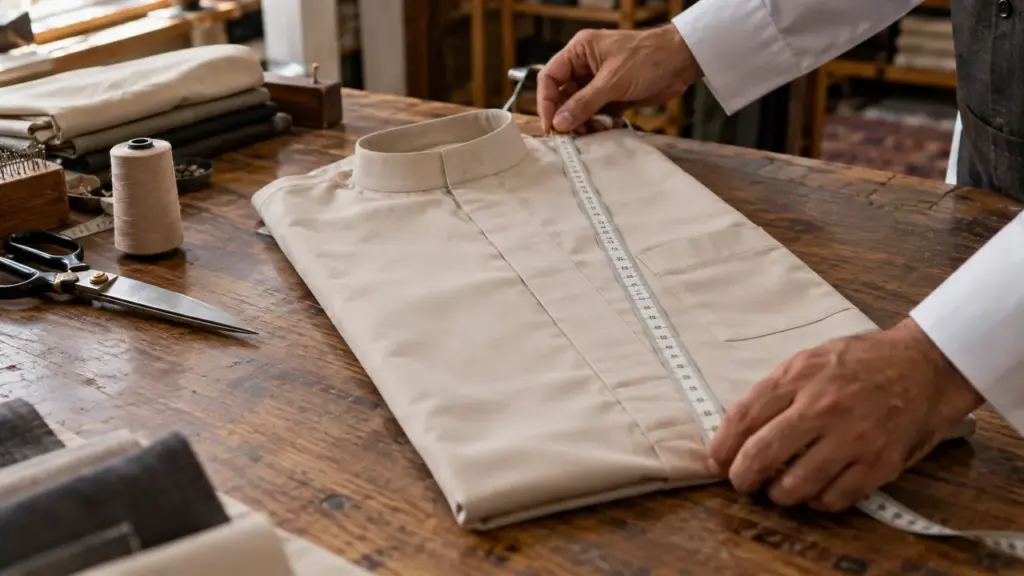
Before buying, especially online, it is essential to take precise measurements: chest, length from shoulder to ankle, and sleeve length. Always check each seller’s own size guide, as cutting standards can vary significantly from one brand to another.
Care tips
Washing at a low temperature and drying in the open air generally preserve the quality of the fabric and prevent shrinking, especially for pure cotton models. Ironing the garment while slightly damp also gives a crisp result without damaging the fibres. For women looking for similar clothing advice, our guide to the hijab for women covers the same questions of fabrics and choices for each occasion.
Loose and comfortable, the qamis is particularly well suited to prayer: to learn more about this daily practice, our guide how to pray in Islam details the essential steps.
Frequently asked questions
What is the most comfortable fabric for a qamis?
Cotton remains the most common fabric for its comfort and breathability, particularly suited to everyday wear.
What length should a qamis be?
For men, the Sunnah asks that the garment not go below the ankles (Sahih al-Bukhari 5787).
What is the difference between the regional styles of qamis?
The Pakistani qamis is often worn with matching trousers, the Gulf qamis is more fitted with a mandarin collar, and the North African qamis is looser and sometimes embroidered.
How do I choose the right size online?
Take precise measurements and check each seller’s own size guide, as cuts vary between brands.
How should I care for a cotton qamis?
Washing at a low temperature and drying in the open air preserve the fabric and prevent shrinking.