Today the hijab for women comes in a wide variety of styles, fabrics and ways of wearing it, which can make choosing difficult for anyone looking for the model best suited to their needs.
This article presents the main criteria to know to choose your hijab well.
Contents
- What is a hijab?
- The main fabrics and their uses
- The different shapes and styles
- Choosing according to occasion and season
- Accessories that make wearing a hijab easier
- Care tips
- Frequently asked questions
What is a hijab?
The hijab is the veil worn by many Muslim women to cover the hair and neck, as part of a religious practice of modest dress. It comes in a multitude of shapes, sizes and fabrics, so that every woman can adapt how she wears it to her personal preferences and the circumstances.
The main fabrics and their uses
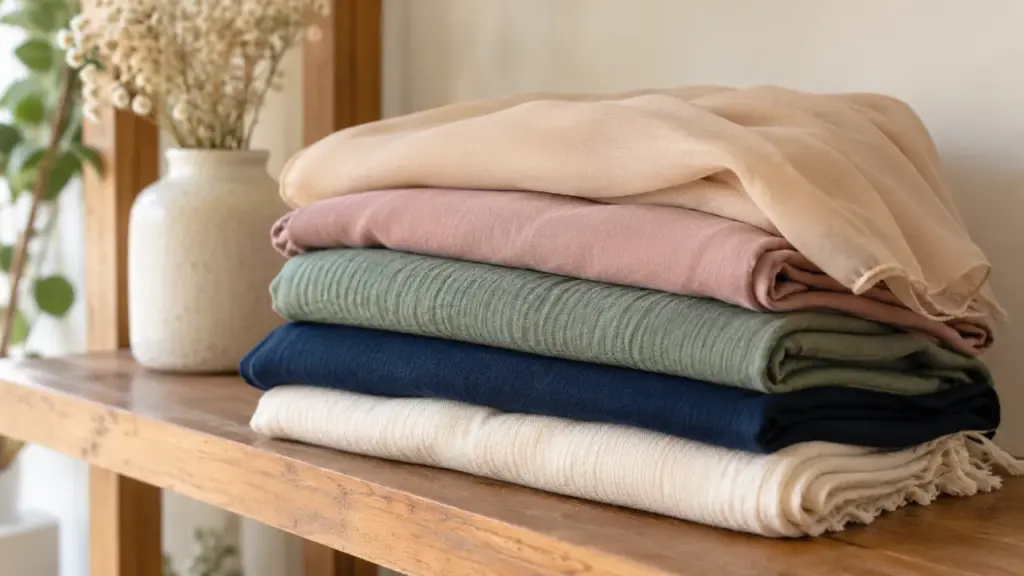
Light, flowing chiffon remains very popular for everyday wear and hot seasons, while jersey, thicker and stretchy, holds in place easily and is particularly suitable for beginners. Silk and satin, smoother and more elegant, are mostly kept for special occasions, while cotton remains a versatile choice appreciated for its everyday comfort.
The different shapes and styles
The classic rectangular hijab, tied by hand, offers great freedom of style but takes a little practice, while the pre-shaped instant hijab makes putting it on much easier every day. The ready-to-wear triangle hijab is also a very common quick option, especially for sport or occasional use.
Choosing according to occasion and season
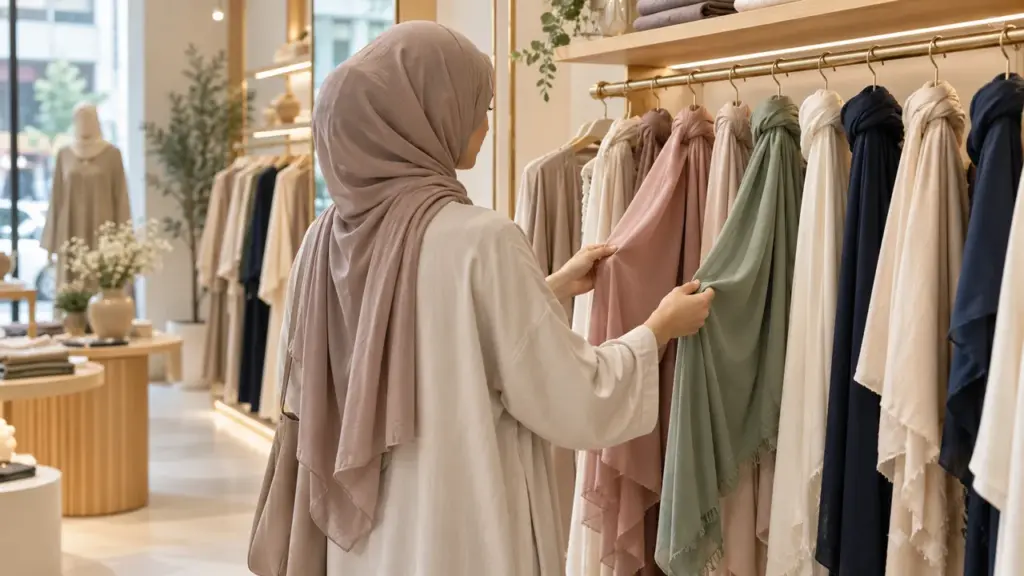
For everyday and professional wear, matt, understated fabrics such as jersey or cotton give a discreet look and stay comfortable all day. For special occasions, more fluid and shiny fabrics such as silk or satin add a touch of elegance, while hot seasons naturally call for light, breathable fabrics such as chiffon.
Accessories that make wearing a hijab easier
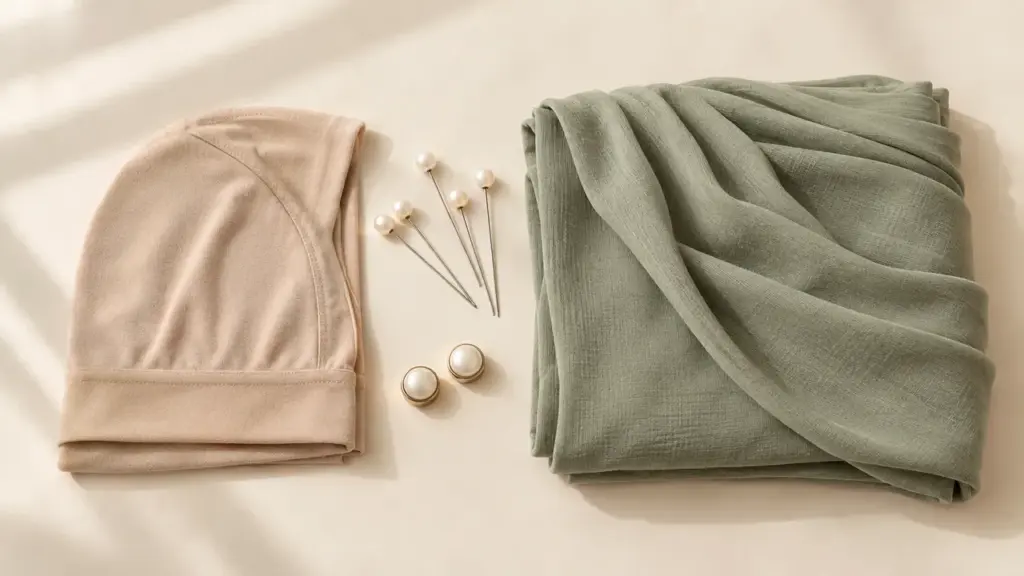
Suitable pins, an underscarf to stop slipping and hold the hair in place, and an under-hijab to add volume are accessories commonly used to make the hijab easier to wear and keep it stable all day long.
Care tips
Gentle washing by hand or in the machine at a low temperature generally preserves delicate fabrics such as chiffon or silk better. Avoiding the tumble dryer for these fabrics and drying them flat also helps them keep their shape and shine longer. To complete your outfit, our guide to the jilbab for women covers another traditional garment often worn with the hijab.
These criteria of fabric and comfort also echo those in our dedicated guide to the qamis for men, for traditional men’s clothing.
Frequently asked questions
Which fabric is best for everyday wear?
Jersey or cotton offer a good balance of comfort, hold and easy care for everyday use.
What is the difference between an instant hijab and a classic hijab?
The instant hijab is pre-shaped and quick to put on, while the classic rectangular hijab is tied by hand and offers more freedom of style.
What is an underscarf for?
This inner cap stops the hijab from slipping and holds the hair in place, while adding comfort.
Which fabric is best for special occasions?
Silk or satin give a more elegant, shiny look, particularly suited to special occasions.
How should I care for a silk hijab?
Gentle washing at a low temperature and drying flat, avoiding the tumble dryer, help preserve the fabric longer.