The jilbab for women, a loose garment covering the whole silhouette, appeals to more and more women looking for an outfit that is modest, comfortable and practical every day.
This article presents the key criteria for choosing your jilbab well.
Contents
- What is a jilbab?
- Jilbab and abaya: what is the difference?
- Fabrics and cuts available
- Choosing your jilbab according to use
- Taking your measurements
- Pairing your jilbab with a hijab
- Frequently asked questions
What is a jilbab?
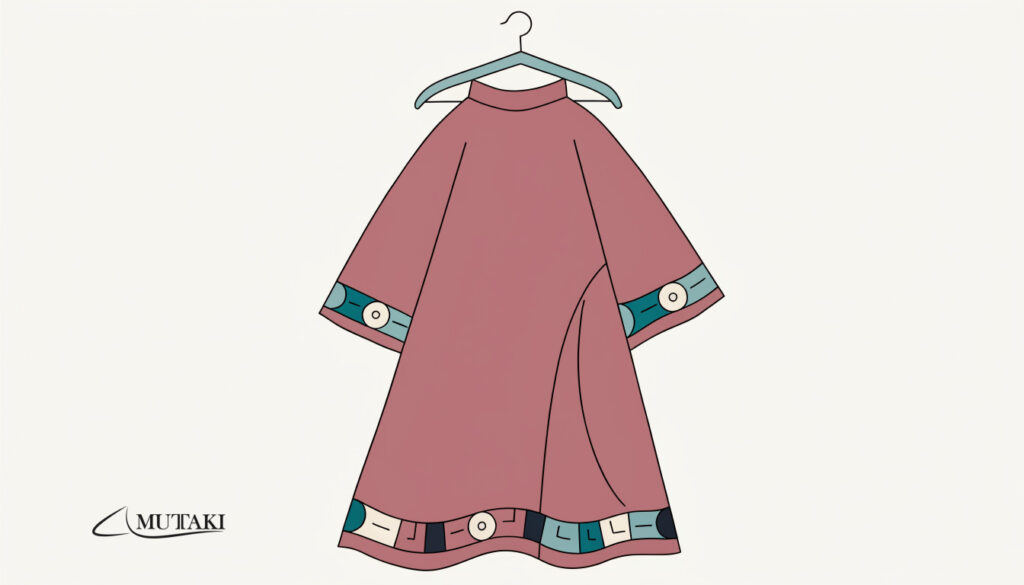
The jilbab is a loose garment, in one piece or in two pieces (matching skirt and top), covering the body from head to toe except for the face and hands. It is an outer garment worn over everyday clothes, particularly popular as an outfit for going out or for prayer.
Jilbab and abaya: what is the difference?
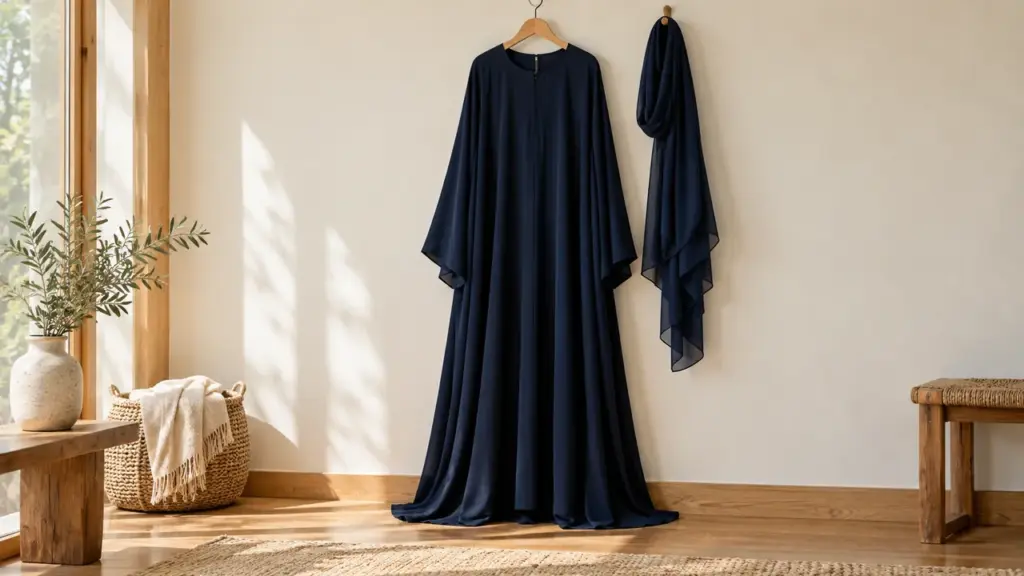
Although often confused, the jilbab and the abaya differ in a few ways: the abaya, which originates from the Gulf, usually opens at the front like a cloak, while the traditional jilbab is more like a closed dress or two separate pieces (skirt and top). Regional customs and fashion trends have, however, brought the two terms much closer in everyday language.
Fabrics and cuts available
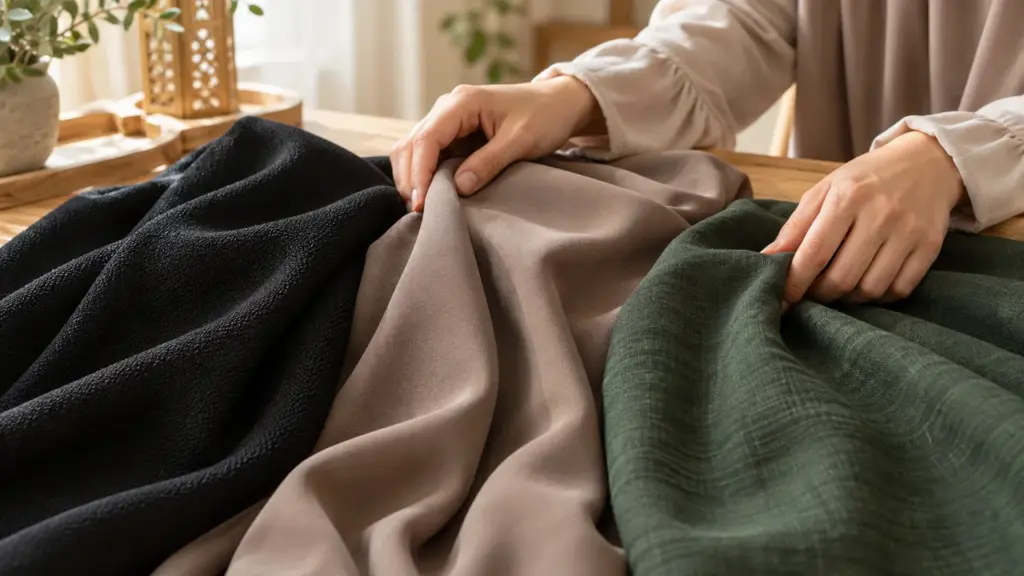
The two-piece jilbab, made up of a matching skirt and top, offers more freedom of movement and is easier to put on. The one-piece jilbab, slipped on like a dress, gives a more uniform silhouette. As for fabrics, crepe and nida are very popular for their fluid drape and opaque look, while cotton remains the favourite for more relaxed everyday wear.
Choosing your jilbab according to use
For prayer, a one-piece jilbab that can be slipped on quickly is often preferred, especially for the five daily prayers. For going out, the two-piece jilbab offers more freedom of movement, which is much appreciated in daily life. Combined with a comfortable prayer mat, such as our brown prayer mat, the jilbab makes it easy to perform the five daily prayers in good conditions.
Taking your measurements
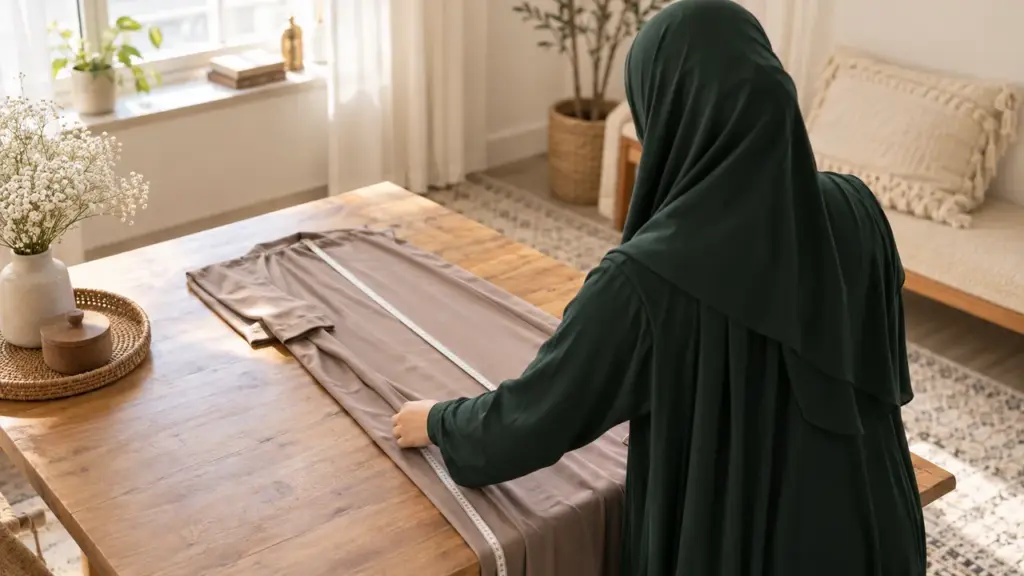
Before buying, especially online, it is best to measure your total height from shoulder to feet, as well as your chest and hip measurements for fitted models. Checking each brand’s own size guide is essential, as cuts can vary considerably from one manufacturer to another.
Pairing your jilbab with a hijab
The jilbab is traditionally worn with a matching or contrasting hijab, according to taste. Our dedicated guide to the hijab for women details the different fabrics and styles available to complete your outfit harmoniously for each occasion and season.
Frequently asked questions
What is the difference between a jilbab and an abaya?
The abaya usually opens at the front like a cloak, while the traditional jilbab is a closed dress or comes in two pieces — although the two terms are used much more interchangeably today.
Which jilbab is best for prayer?
A one-piece jilbab, quick to slip on, is often preferred for the five daily prayers.
Which fabric should I choose for an opaque jilbab?
Crepe and nida are very popular for their fluid drape and opaque, non-transparent look.
How do I choose the right jilbab size online?
Measure your total height as well as your chest and hips, then check each brand’s own size guide.
Is a two-piece jilbab more practical than a one-piece?
The two-piece jilbab offers more freedom of movement, while the one-piece is often quicker to put on.