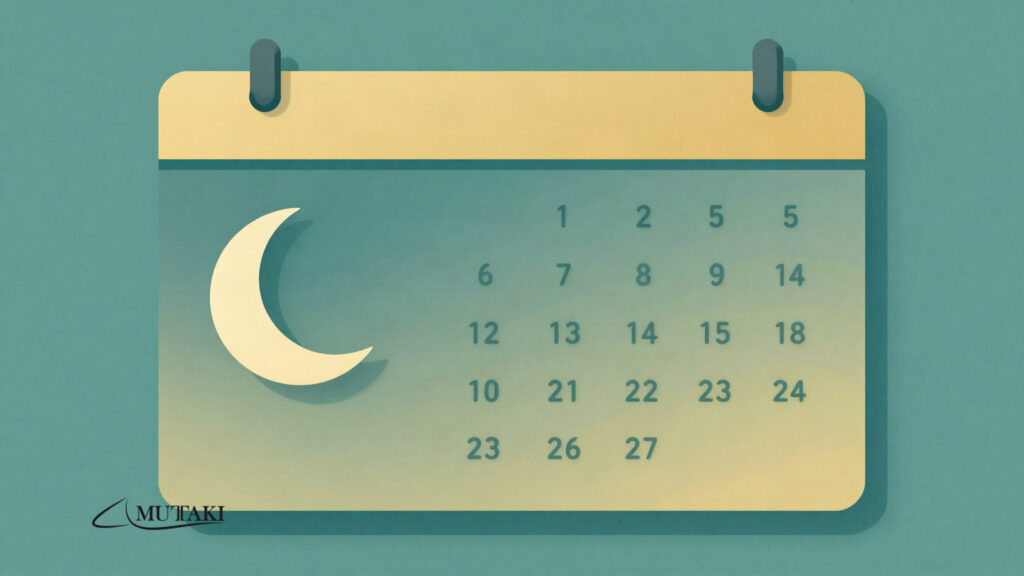
The Hijri calendar 2026 helps you find your way in the Muslim religious year and easily convert a date between the Islamic lunar calendar and the Gregorian calendar used in everyday life.
This article explains how the Hijri calendar works and how to convert its dates into the Gregorian calendar.
Contents
- What is the Hijri calendar?
- The origin of the calendar: the Hijra
- The twelve months of the Islamic calendar
- How to convert a Hijri date into a Gregorian date
- The key religious dates of the Hijri year 1447–1448
- What the calendar is used for in daily life
- Frequently asked questions
What is the Hijri calendar?
The Hijri calendar, also called the Muslim or Islamic calendar, is a lunar calendar made up of twelve months of 29 or 30 days each, for a total year of about 354 or 355 days. Unlike the Gregorian calendar, which is based on the solar cycle, it strictly follows the cycles of the moon, which explains why it shifts gradually from year to year compared with the calendar used in the West.
The origin of the calendar: the Hijra
The Hijri calendar begins with the Hijra, the Prophet Muhammad’s ﷺ migration from Mecca to Medina in 622 CE. This founding event marks year 1 of the Islamic calendar, hence the name “Hijri” given to this system of dating, used for all important religious events.
The twelve months of the Islamic calendar
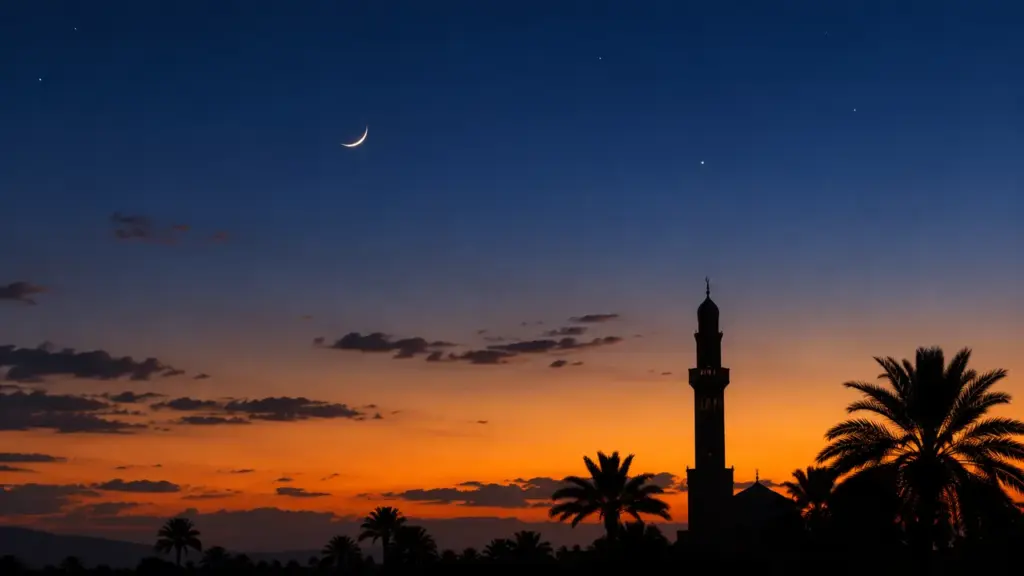
The Hijri year has twelve lunar months, including Ramadan (the ninth month, dedicated to fasting), Dhul-Hijjah (the twelfth month, the time of the pilgrimage and Eid al-Adha) and Muharram (the first month of the year and one of the four sacred months). Each month begins with the sighting of the new crescent moon, which is why its exact length (29 or 30 days) is only confirmed at the time of the sighting.

How to convert a Hijri date into a Gregorian date
Several online tools and mobile apps allow instant, reliable conversion between the two calendars, usually more accurate than a manual calculation because of the irregularities of actual moon sighting. These converters remain the most practical way to find quickly the Gregorian date of a religious event, or the other way round.
The key religious dates of the Hijri year 1447–1448
The main landmarks include Ramadan 2026 (which began on 18 February in France and 19 February in Morocco), Eid al-Fitr marking its end (Friday 20 March 2026 in France and Morocco), then, about seventy days later, Eid al-Adha, on 10 Dhul-Hijjah. For each festival, the exact date in your country is the one announced by the competent religious authority.

What the calendar is used for in daily life
Beyond the major festivals, the Hijri calendar also sets the rhythm of more regular practices: recommended voluntary fasts on certain days of the month, religious anniversaries, or simply the date used in correspondence and official documents in many Muslim countries. Knowing the current Hijri date helps you prepare for these moments throughout the year.
Frequently asked questions
Why is the Hijri calendar shorter than the Gregorian calendar?
Because it follows the lunar cycle (about 354–355 days a year) rather than the solar cycle (365 days), which creates a gradual shift of about eleven days a year between the two calendars.
What is the origin of the Hijri calendar?
It begins with the Hijra, the Prophet Muhammad’s ﷺ migration from Mecca to Medina in 622, the founding event that marks year 1 of the Islamic calendar.
How can I find today’s Hijri date?
Many mobile apps and specialised websites show the Hijri date in real time and convert it instantly into the Gregorian calendar.
Does a lunar month always last 30 days?
No, each month of the Hijri calendar lasts 29 or 30 days depending on the actual sighting of the new crescent moon, which is only confirmed at the time of the sighting.
What are the most important months of the Hijri calendar?
Ramadan (the ninth month, dedicated to fasting) and Dhul-Hijjah (the twelfth month, the time of the pilgrimage and Eid al-Adha) are among the most important months of the religious year.