
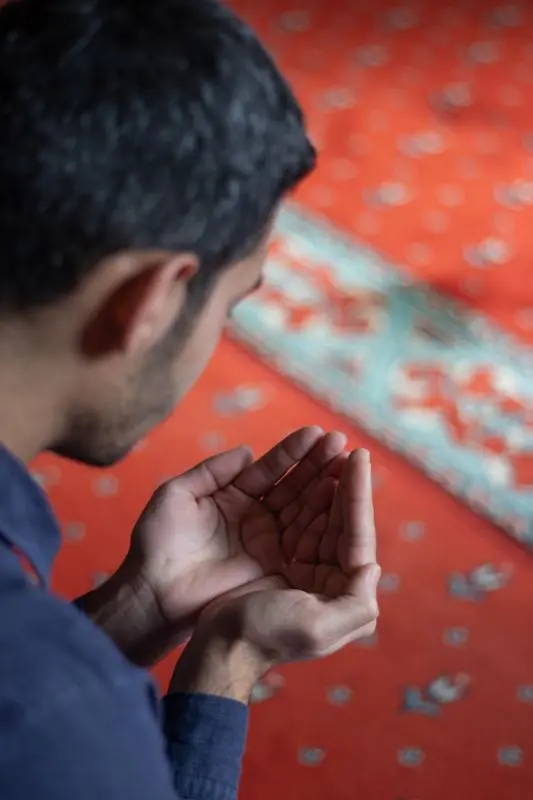
Learning to pray in Islam is both a spiritual and a practical journey. Whether you are a new convert, a teenager starting to practise or an adult returning to faith, learning the Islamic prayer takes method, patience and the right tools.
Contrary to what you might think, learning the prayer does not require years of study. With a gradual, structured approach, you can perform your first prayers correctly within a few weeks. This guide explains where to start, in what order to learn the surahs and movements, and how to strengthen your practice over time.
Learning to pray always begins with two fundamentals: Surah Al-Fatiha (obligatory in every rak’ah) and the movements of wudu (ablution). Once these basics are in place, everything else is learned naturally through repetition.
For the precise steps of each movement during the salat, see our detailed guide how to pray in Islam step by step. This article focuses on the learning method — the progression from zero to mastery.
Why and How to Learn the Prayer?
Prayer (salat) is the second pillar of Islam. It is obligatory five times a day for every adult Muslim of sound mind. Learning to pray is not optional for the believer — it is a spiritual and religious necessity.
Learning the prayer brings many benefits beyond the religious obligation:
- It structures your time and your day around five moments of reflection
- A daily connection with Allah, without any intermediary
- Peace of mind — the salat brings calm and focus
- Belonging to the worldwide Muslim community (ummah)
To never miss a prayer, check the prayer times in Paris or in your city. Planning your prayers is already a way of learning Islamic discipline.
Learning the Prayer — a 5-Step Programme
Step 1 — Memorise Surah Al-Fatiha (week 1)
Al-Fatiha is the heart of the prayer — without it, no rak’ah is valid. Start by listening to it recited by a well-known reciter, then repeat it phrase by phrase. With daily practice (10–15 minutes), Al-Fatiha is usually memorised within a week. Quran and prayer apps can help you track your progress.
Step 2 — Learn wudu (week 1, at the same time)
Wudu (ablution) always comes before prayer. Its steps are quickly learned through practice. Do it every morning for a week to make it automatic. To find the direction of Mecca (qibla) in your home, use a compass app from the start.
Step 3 — Learn the movements and positions (week 2)
The movements of the prayer — qiyam, ruku’, sujud, julus — are learned by imitation and repetition. Watch reliable teaching videos (from recognised mosques or Islamic institutes), then practise on a prayer mat. The mat marks out your space and anchors the ritual in your daily life.
Step 4 — Memorise the words of the prayer (weeks 2–3)
Beyond Al-Fatiha, the prayer contains other essential words: the takbir (“Allahu Akbar”), the tasbih in ruku’ and sujud, the tashahhud, the salawat (blessings on the Prophet ﷺ) and the taslim. Learn them in the order in which they appear in the salat. Memo cards or dedicated apps speed up this learning.
Step 5 — Practise the 5 complete prayers (weeks 3–4)
Once the basics are in place, practise the five daily prayers in full with the correct number of rak’ahs. Start with Dhuhr or Maghrib (the most accessible), then progress to Fajr (the most demanding in terms of timing).
Essential Surahs for Learning to Pray
Beyond Al-Fatiha, several short surahs are worth memorising for the additional recitations:
- Al-Ikhlas (Surah 112) — 4 verses, very short, describes the Oneness of Allah
- Al-Falaq (Surah 113) — 5 verses, protection from evil
- An-Nas (Surah 114) — 6 verses, protection from evil whispers
- Al-Kawthar (Surah 108) — 3 verses, the shortest surah of the Quran
- Al-’Asr (Surah 103) — 3 verses, on the value of time
These surahs form the foundation of every prayer. They can be learned in 2 to 3 weeks with 15 minutes of daily practice.
Learning the Prayer — Common Mistakes to Avoid
When learning the Islamic prayer, some mistakes come up frequently among beginners:
- Reading the prayer from a sheet instead of reciting it from memory — understandable at first, but aim to memorise quickly
- Forgetting wudu — prayer without ablution is invalid. Make it a habit.
- Facing the wrong direction — use a compass app until the qibla direction is second nature
- Rushing — each position must be performed calmly (tuma’ninah): stay still in ruku’ and sujud long enough to say the tasbih.
Which Prayer Mat to Choose When Learning to Pray?
To learn to pray in the best conditions, the choice of prayer mat matters. Beginners especially benefit from a comfortable, practical model.
Our foldable prayer mat with backrest, for example in dark grey, suits beginners well: its built-in ergonomic backrest supports your back, it weighs 1 kg and folds into a 39 × 30 cm bag with a handle and shoulder strap. The backrest supports your back during seated moments, for example when revising supplications.
As an encouraging gift for a loved one who is learning to pray, our burgundy prayer mat is an elegant and useful gesture.
Our AlMuttaki Selection to Start Praying
At AlMuttaki, we know that good equipment helps beginners stay motivated. Our prayer mats are designed to encourage regular practice.
Dark Grey Mat — maximum comfort, ergonomic backrest, ideal for long learning sessions.
Burgundy Mat — elegant and motivating, perfect as a first personal prayer mat.
Midnight Blue Mat — soothing, helps concentration during your first prayers. Free pick-up point delivery in France from €49.

FAQ — Learning the Islamic Prayer
How long does it take to learn to pray in Islam?
With regular practice of 15–20 minutes a day, a beginner can learn to perform the prayer correctly in 3 to 4 weeks. Memorising Al-Fatiha usually takes about a week. Full mastery of the movements and words takes 2 to 3 months of daily practice.
Can you learn the prayer alone, or do you need a teacher?
You can certainly learn to pray on your own with the resources available (books, apps, videos). However, learning with an imam or a practising relative helps you avoid mistakes from the start. Being corrected early by someone experienced speeds up learning.
Which surah should you memorise first for the prayer?
Al-Fatiha (the Opening) is the first to memorise — it is obligatory in every rak’ah of every prayer, and without it the prayer is not valid. After Al-Fatiha, short surahs such as Al-Ikhlas and Al-’Asr are the most recommended for beginners.
How can you learn the prayer in Arabic without knowing the language?
It is entirely possible to learn the prayer without speaking Arabic, using transliteration cards (phonetic writing in Latin characters) and audio recordings. Many apps offer this feature. Try also to understand the general meaning of what you recite — it greatly helps concentration.
Conclusion
Learning to pray in Islam is a spiritual journey that begins with a single step. Al-Fatiha, wudu, the basic movements — each element is learned gradually. With method and regularity, the salat becomes second nature and a solid pillar of your daily life.
Get equipped now to learn to pray in the best conditions. Order your AlMuttaki prayer mat — free pick-up point delivery in France from €49, dispatched within 24–48 working hours.