How to Choose the Ideal Prayer Mat for Your Comfort and Your Faith
A prayer mat is not just a ritual accessory: it is an extension of your spiritual life. Choosing the right model can turn every salat into a moment of deep calm, physical stability and better concentration. Many Muslims overlook this and simply buy the first mat they find, without considering their body, their lifestyle or their specific needs. Yet a suitable mat improves comfort and helps you focus on your connection with Allah.
Why a good prayer mat makes all the difference
Physical comfort during prostration
Prostration (sujud) involves bending the body many times a day, which puts strain on the knees, wrists and lower back. A mat that is too thin or too hard increases discomfort, especially for older people or those with joint pain. A padded mat with high-density foam cushions the knees and gives stable support without flattening over time.
The spiritual impact of a dedicated prayer space
Having your own mat creates a “small sanctuary” in your daily life. Many worshippers find they concentrate better on a mat that belongs to them, which they unfold only for prayer. This symbolic link between the object and the act of worship helps build regularity, especially in busy homes where the prayer space needs to be gently set apart.
Essential criteria for choosing your mat
Buying without thinking often means regretting your choice a few months later. Here are the concrete criteria to consider before choosing your ideal prayer mat.
Thickness and material
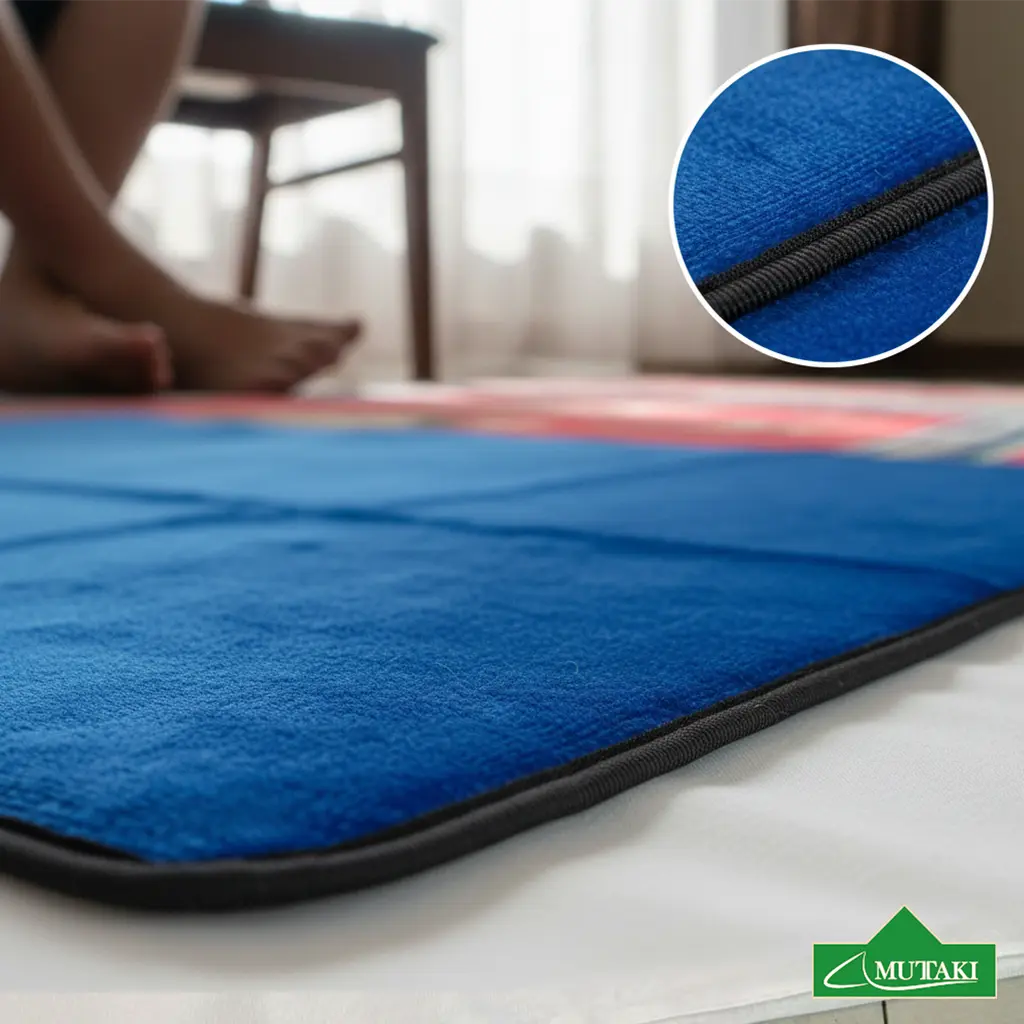
The ideal thickness depends on your needs: people with sore knees generally appreciate a thicker mat. The surface material matters just as much: soft fabrics are pleasant to the touch, absorbent and easy to clean. Avoid cheap mats that slide on parquet or tiles — choose ones with a non-slip backing.
A good indicator of quality? Weight and finish: a well-made mat feels dense, with neat seams and edges.
Size and portability
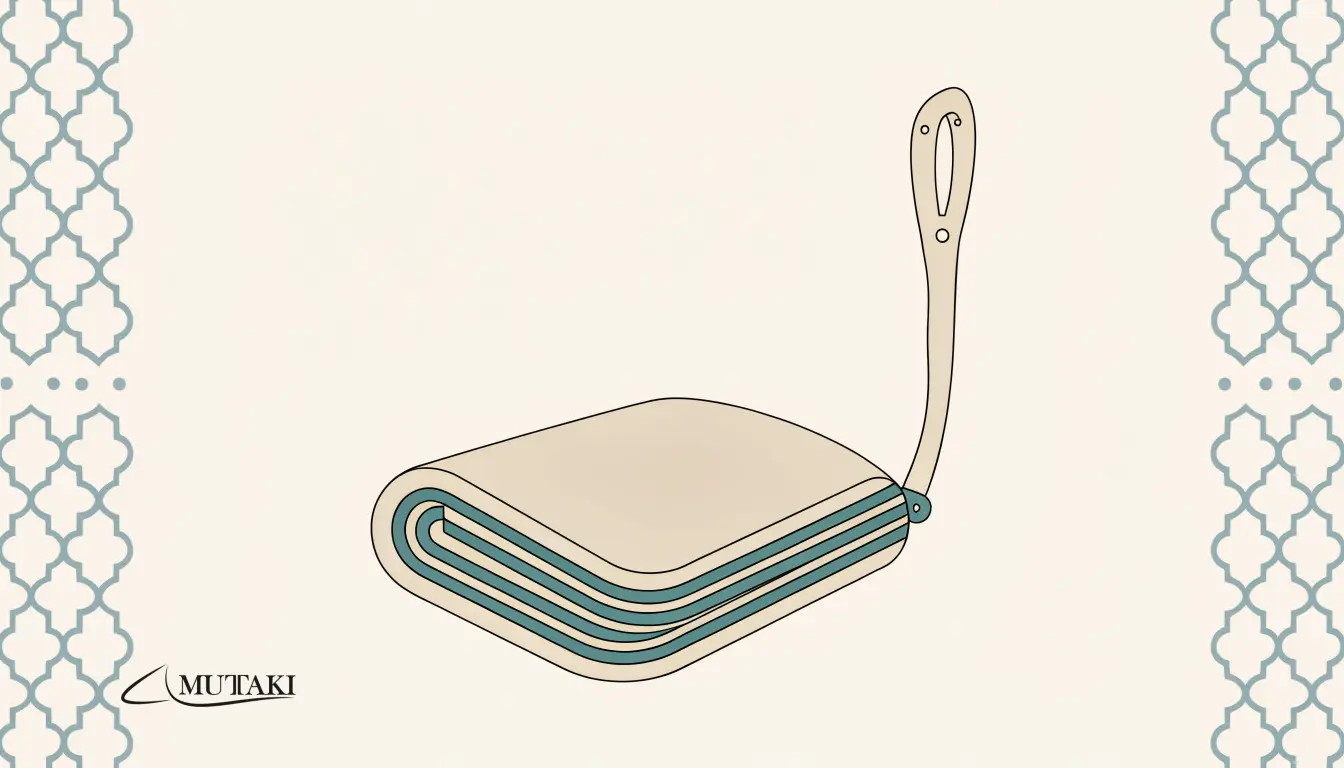
The standard size suits most adults, but travellers, students and people sharing accommodation need compact or foldable models. Foldable mats with a carrying strap or handle are particularly practical for frequent trips (work, travel, mosque). But don’t sacrifice comfort for lightness: some ultra-thin models compromise comfort over the long term.
Design and Islamic symbolism
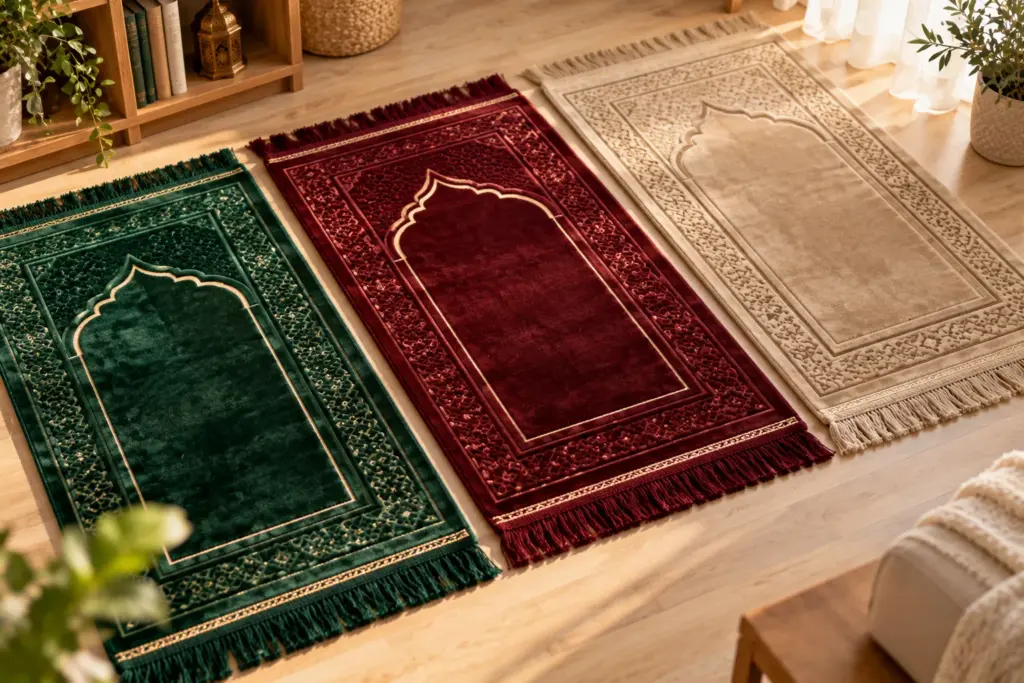
Design is not a detail: it can support your intention (niyyah). Islamic geometric patterns (arabesques, stylised mashrabiya) evoke harmony, while a discreet mihrab motif indicating the direction of the prayer helps maintain focus. Prefer sober designs that do not distract you, and avoid mats bearing Quranic verses or the names of Allah, since the mat is placed on the floor and stepped on — many scholars advise against it.
Care and durability: making your mat last
A well-maintained mat can last many years, even with daily use. The most common mistake? Washing a padded mat in the machine without checking the label, which can damage the foam and seams.
Easy cleaning without damaging the fabric
For regular care, use a damp cloth with a little mild soap and let it air-dry, away from direct sunlight. For a stubborn stain, first test a mild product on an inconspicuous area. Avoid harsh chemicals: they weaken the fabric and can irritate the skin during prostration.
Mats in natural fabrics (cotton, linen) tolerate occasional hand washing better, while padded models usually need surface cleaning only.
Tips for hygienic storage
If your mat is damp, let it dry flat before folding it. Store it in a dry place, ideally in a breathable cotton bag. If you live in a humid region, a small sachet of silica gel in the storage space will absorb excess moisture.
For whom? Children, new Muslims, older people
Each profile has specific needs. Adapting the mat to the person who will use it is essential for a lasting, joyful prayer practice.
Educational mats with a visual guide
For children aged 3 to 10, mats illustrating the prayer positions (qiyam, ruku’, sujud) are an excellent teaching tool. Some models even include numbered steps. These mats, often shorter, are made of easy-to-clean materials — an advantage in homes with several children.
Ergonomic options for the joints
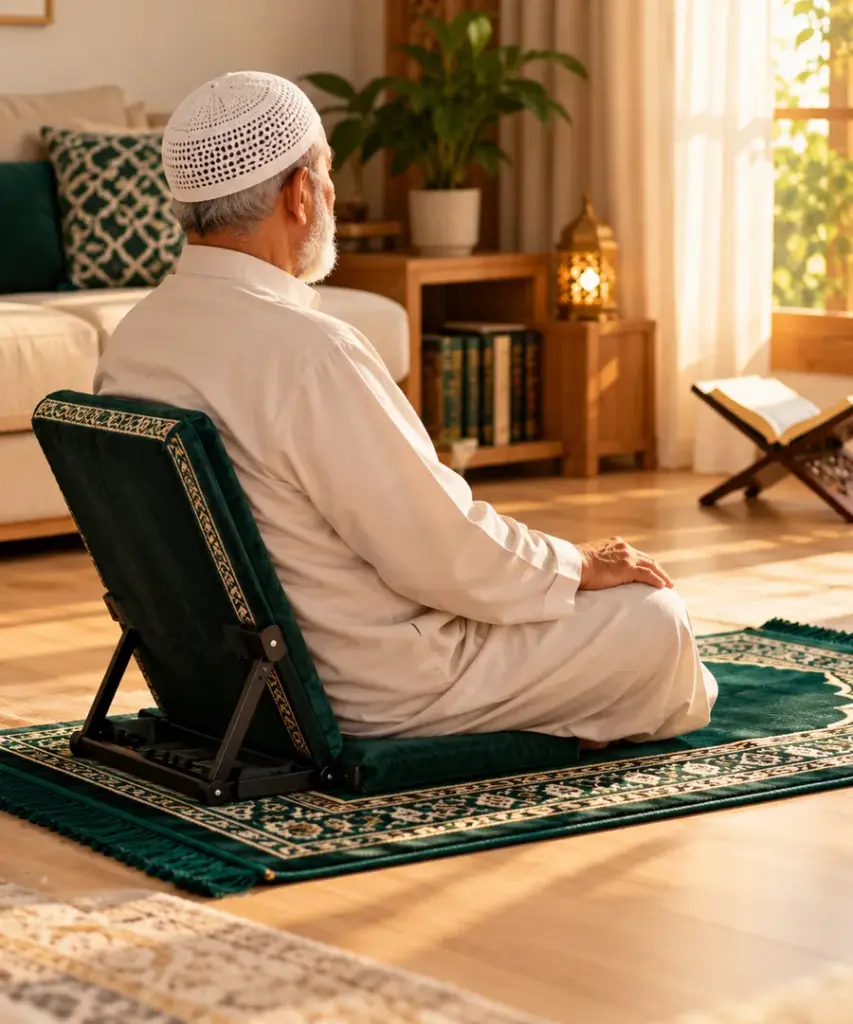
Older people and those with chronic pain benefit from thicker mats with a slightly textured surface to prevent slipping. Some models include a backrest so you can sit comfortably between prayers or during dhikr and Quran reading. People who cannot stand or prostrate may pray seated on a chair — Islam makes this easy for them.
Finally, for new Muslims, choosing a mat with sober colours and patterns (without images of living beings) makes it easy to use in shared spaces while respecting Islamic principles. A well-chosen mat becomes a silent companion on the path of faith.
Choosing your prayer mat means affirming that your spiritual life deserves as much attention as practical matters. By combining comfort, beauty and functionality, you create a space where body and soul find their balance. Take the time to compare and test: your next salat will be worth it.